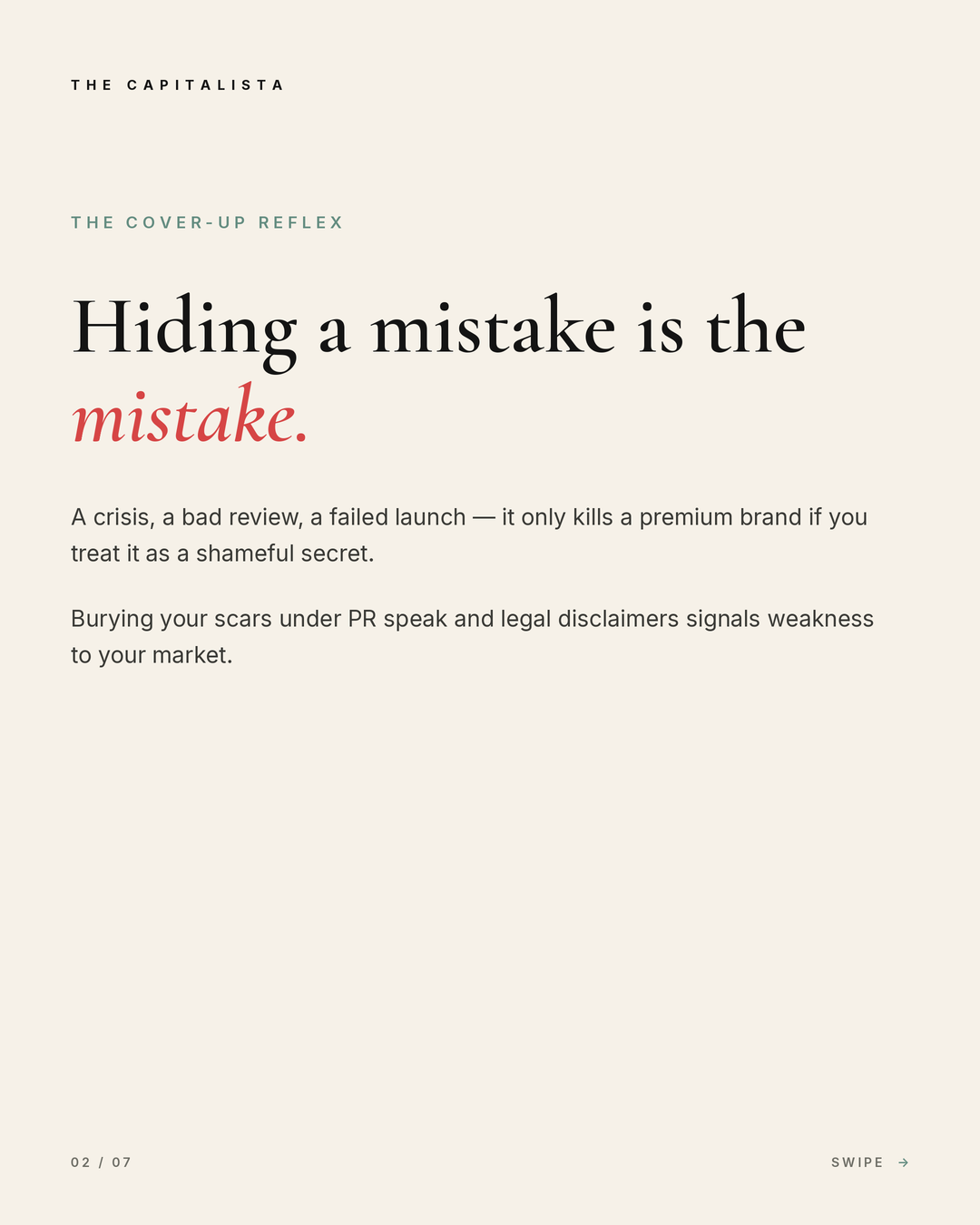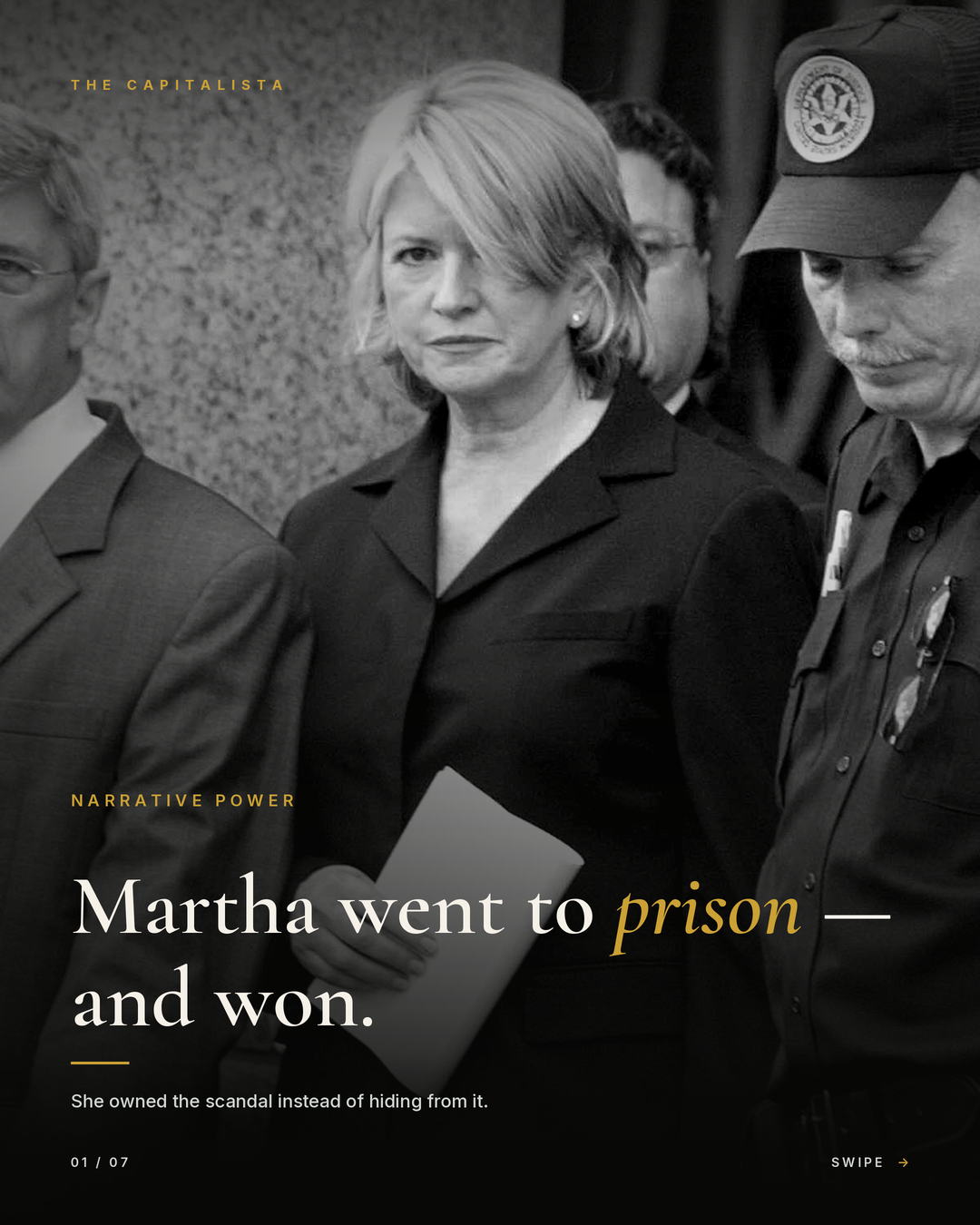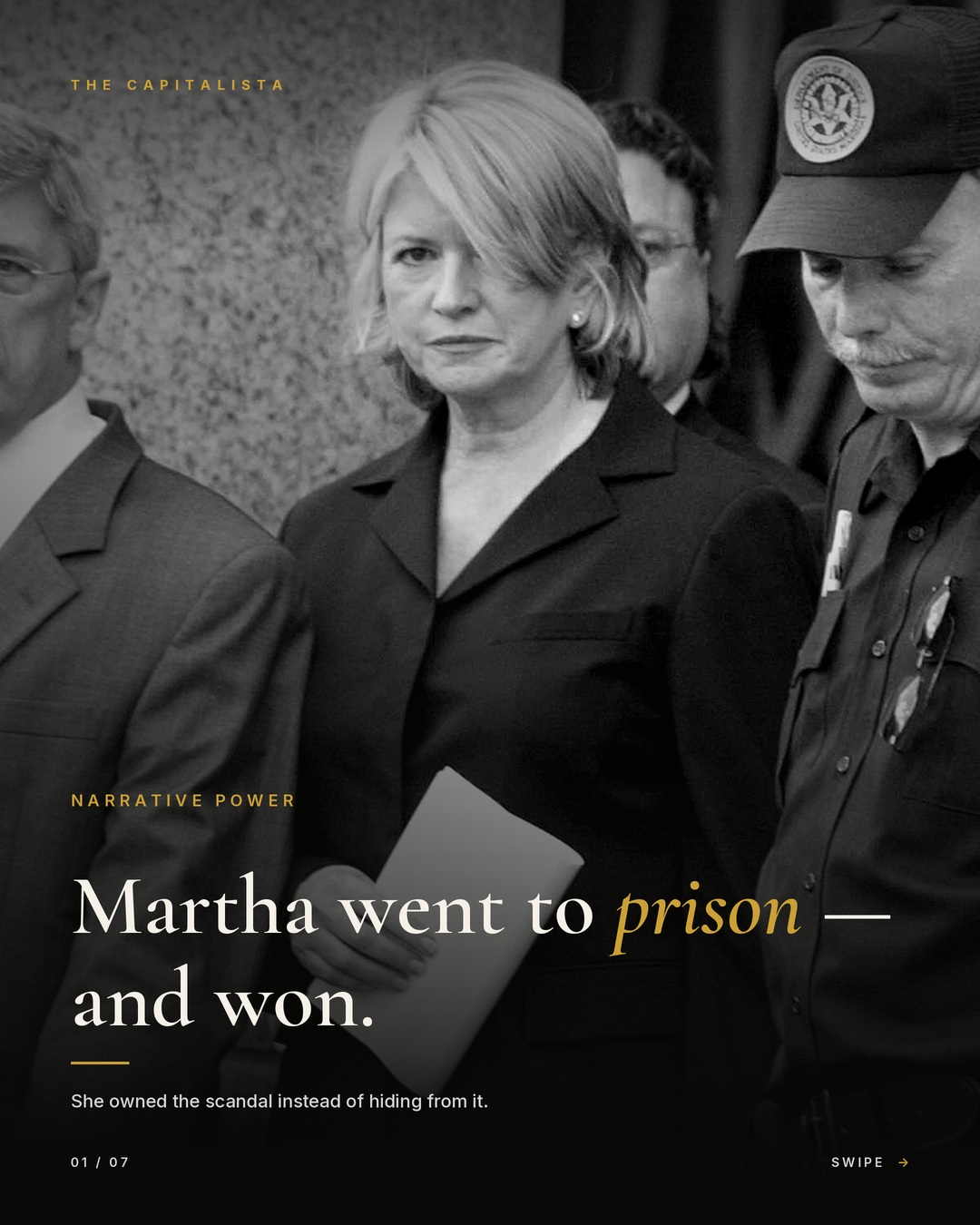
In 2004, Martha Stewart — the billionaire lifestyle mogul whose entire empire was built on domestic perfection
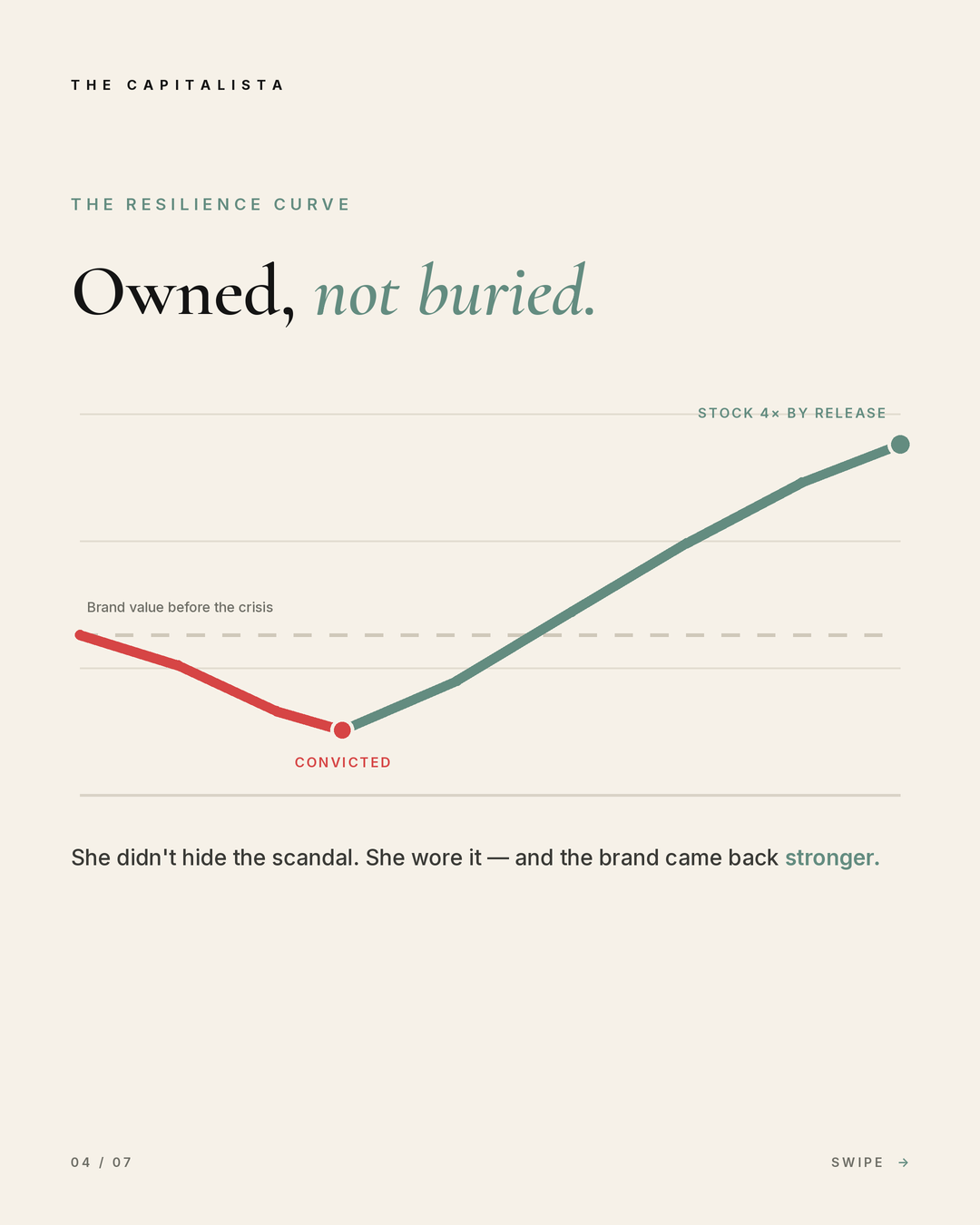
, pristine homemaking, and impeccable taste — was convicted of obstruction of justice, conspiracy, and making false statements in connection with the ImClone stock scandal. She served five months in a federal prison.
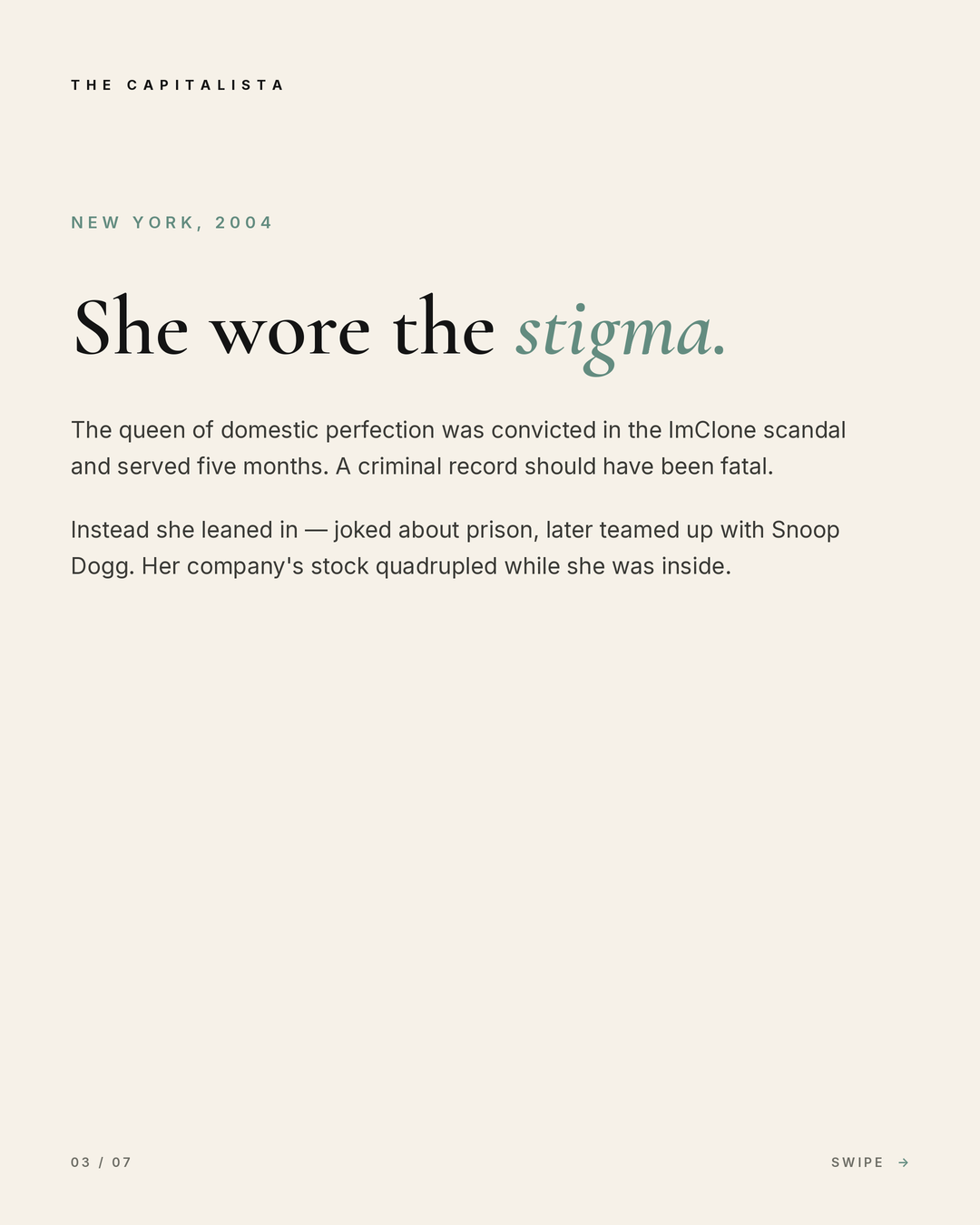
On paper, it should have been the end. A luxury brand founded on flawlessness had just acquired a felony record. The conventional playbook would have been to retreat: issue a lawyerly statement, disappear from public view, and hope the market forgot.
Stewart did the opposite. She leaned all the way in. She emerged joking openly about her time inside, later teamed up with Snoop Dogg for a beloved cooking show, and transformed her sterile, untouchable corporate image into something far more durable — a culturally beloved, self-aware pop-culture icon. Her company's stock didn't collapse during her incarceration. It quadrupled by the time she was released.
This is one of the most instructive case studies in modern brand management, and the lesson is counterintuitive: a reputational crisis only destroys a premium brand if the founder treats it like a shameful secret. Owning the scar, openly and without apology, is often the most powerful move available to you.
Why hiding a mistake signals weakness
When a crisis hits — a bad review, a failed launch, a public misstep, a legal problem — the instinct is to minimize, bury, and control. Most companies reach immediately for corporate PR speak and legal disclaimers, smoothing the incident into vague, defensive language designed to make it disappear.
The problem is that the market can feel the flinch. Audiences are extraordinarily good at detecting evasion, and evasion reads as weakness. When you tiptoe around a mistake, you signal two things simultaneously: that the mistake has power over you, and that you don't trust your audience to handle the truth. Both erode the relationship.
Worse, hiding a mistake hands control of the narrative to everyone else. A secret is leverage — for critics, competitors, and journalists. As long as you treat the incident as something to be concealed, anyone who surfaces it can weaponize it against you. You spend your energy defending a position that gets weaker every day it stays hidden.
The act of concealment is frequently more damaging than the original event. It converts a single, finite mistake into an ongoing vulnerability.
Owning the stigma takes away its power
Stewart's genius was to refuse the role of the ashamed defendant. She treated the conviction not as a secret to be managed but as a fact to be worn — openly, even humorously. And the moment she did, the story changed.
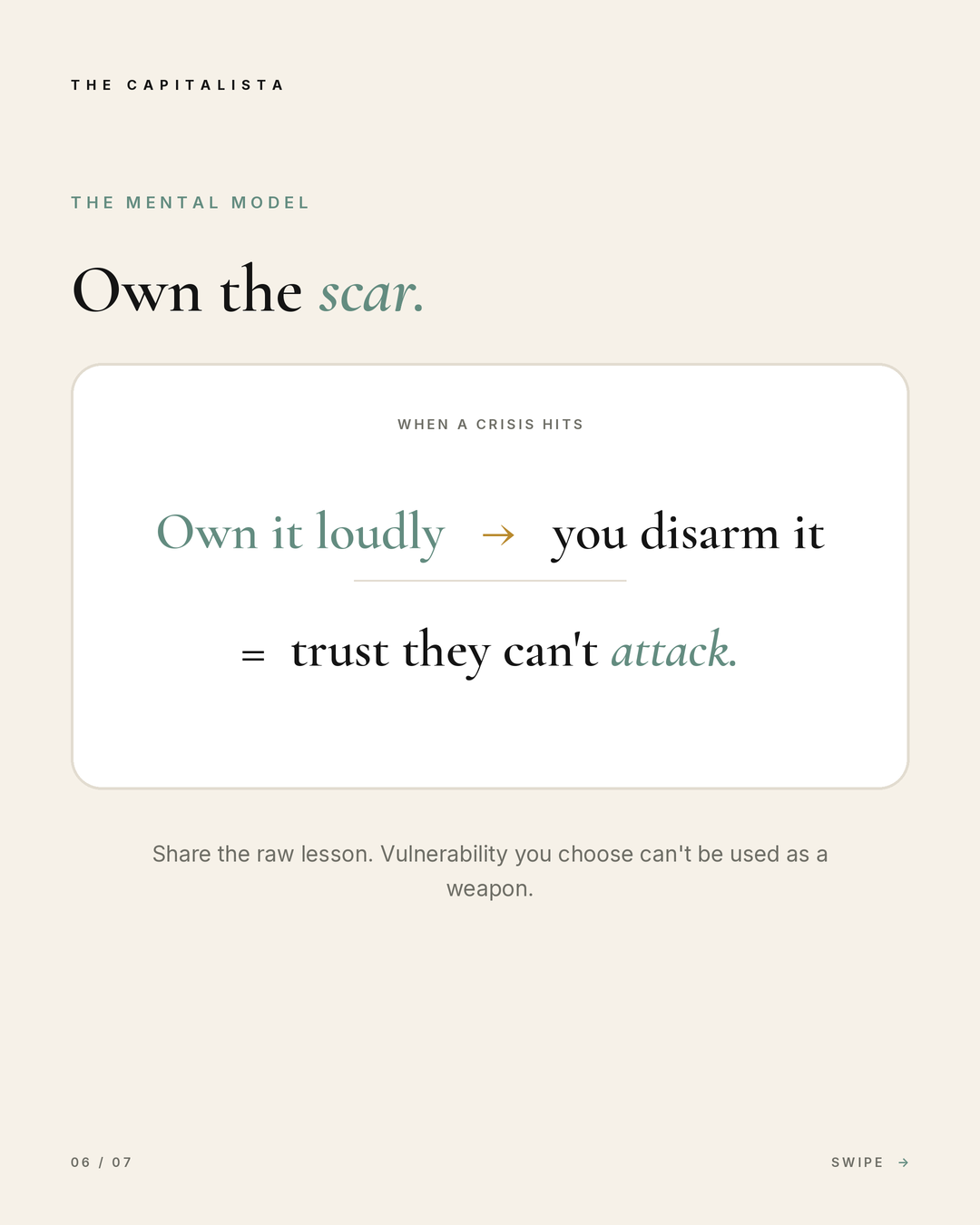
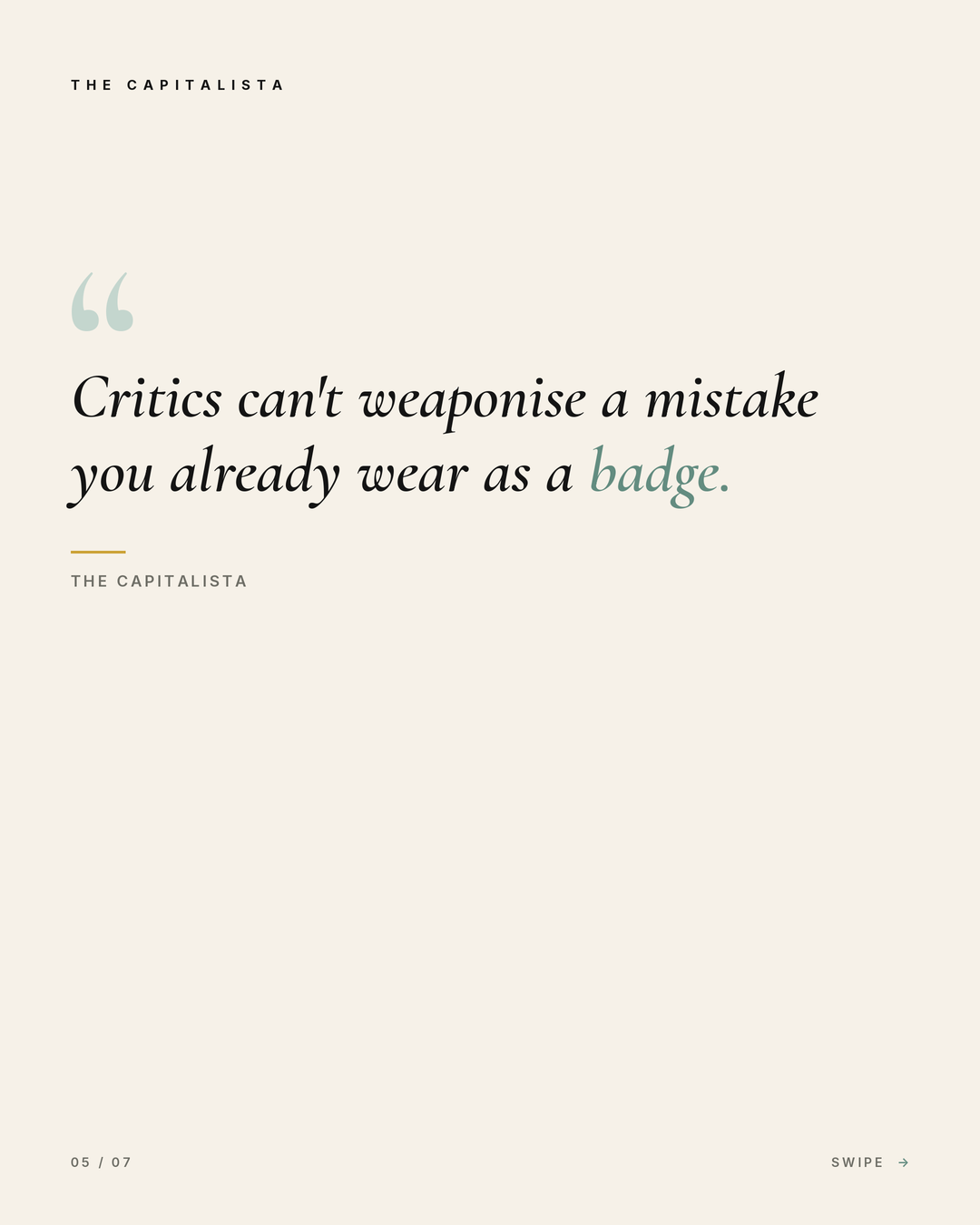
Here's the underlying mechanism: a critic cannot weaponize a mistake you already wear as a badge of honor. The power of an attack comes entirely from the target's desire to hide. When you've already said the thing yourself — plainly, without flinching — there's nothing left to "expose." The ammunition is gone. The narrative is yours.
This is why owning a crisis is so disproportionately effective. It does three things at once. It disarms critics, because there's no secret left to reveal. It signals strength, because only someone secure in their position can speak about their scars without defensiveness. And it builds a bond of authenticity with the audience, because vulnerability you choose — rather than vulnerability that's extracted from you — is the fastest way to earn trust.
Stewart's brand emerged from prison more resilient than it went in, not despite the scandal but because of how she carried it. The perfection that once made her admirable but distant was replaced by something more human and far harder to attack.
Authenticity is a moat, not a liability
There's a common fear among founders, especially those who've built premium or aspirational brands, that admitting any flaw will puncture the image. The Stewart case suggests the opposite. A brand of flawless, sterile perfection is brittle — a single crack threatens the whole edifice. A brand that has openly survived a scar is resilient, because it has already demonstrated it can take a hit.
Authenticity, including the unglamorous reality of your mistakes and operational lessons, functions as a competitive moat. Polished, risk-averse messaging is everywhere and convinces no one. The willingness to speak plainly about what went wrong is rare, and rarity is what earns attention and loyalty.
This doesn't mean manufacturing drama or wallowing in failure. It means refusing to pretend you're flawless, and being willing to share the raw, useful version of your hard-won lessons. The operator who says "here's exactly what we got wrong, and here's what we learned" builds a kind of trust that no amount of carefully sanitized marketing can buy.
How to own a crisis the right way
Turning a reputational scar into an asset is a discipline, not a personality trait. Here's how to apply it.
Name it before anyone else does. The moment you address a mistake openly and first, you take the ammunition away from everyone who might use it against you. Whoever frames the story first controls it — make sure that's you.
Drop the corporate armor. Replace the lawyerly non-statement with plain, human language. Say what happened, take responsibility for your part, and skip the defensive hedging. The goal is for your audience to feel that you trust them with the truth.
Share the lesson, not just the apology. The value isn't in the contrition; it's in the insight. Tell people what the experience actually taught you about your business or yourself. A lesson is useful to your audience in a way that an apology never is.
Carry it with composure, not shame. Stewart's power came from her indifference to the stigma. Own the scar with steadiness — neither defensive nor self-flagellating. Calm ownership is what signals strength.
Choose one real scar and start. Identify a single past failure, a negative client experience, or a misstep you've quietly avoided discussing. Share the unvarnished lesson publicly. You'll usually find it builds more credibility than any polished win.
The takeaway: wear the scar
Martha Stewart's brand survived a felony conviction and five months in prison, and came out stronger, for one reason: she refused to be ashamed of it. She understood that in the attention economy, a flaw you own is an asset, while a flaw you hide is a liability waiting to be exploited.
Your business will make mistakes. You'll have a failed launch, a bad review, a client relationship that went wrong, a decision you regret. The crisis itself is rarely what determines the outcome. What determines the outcome is whether you treat it as a shameful secret to be buried, or a scar to be worn openly.
Bury it, and you hand your critics a weapon and your audience a reason to distrust you. Own it — plainly, calmly, and first — and you build an authenticity that no competitor can attack and no polished campaign can replicate.
Frequently asked questions
How did Martha Stewart's brand recover after prison? Rather than hiding, she addressed her conviction openly and even humorously, rebuilt her image as a relatable, self-aware public figure, and later collaborated on popular projects. Her company's stock quadrupled during her incarceration, and she emerged as a more culturally beloved and resilient brand.
Why is hiding a business mistake worse than admitting it? Concealment signals weakness and hands control of the narrative to critics, who can weaponize anything you're trying to keep secret. Owning a mistake openly removes that leverage, signals confidence, and builds trust — turning a finite event into a closed chapter rather than an ongoing vulnerability.
Does admitting flaws damage a premium or luxury brand? Generally the opposite. A brand built on flawless perfection is brittle and threatened by any crack. A brand that has openly owned and survived a scar is resilient, more human, and far harder for critics to attack.
How should a founder respond to a reputational crisis? Address it first and openly, replace corporate-speak with plain language, take responsibility, and share the genuine lesson learned rather than just an apology. Carry it with calm composure rather than shame, which signals strength and authenticity.
The Capitalista helps founders turn even their hardest lessons into brand equity — CFO optics for the modern achiever. Want a clear-eyed look at where your brand is hiding instead of owning? Book a business health check at thecapitalista.com.