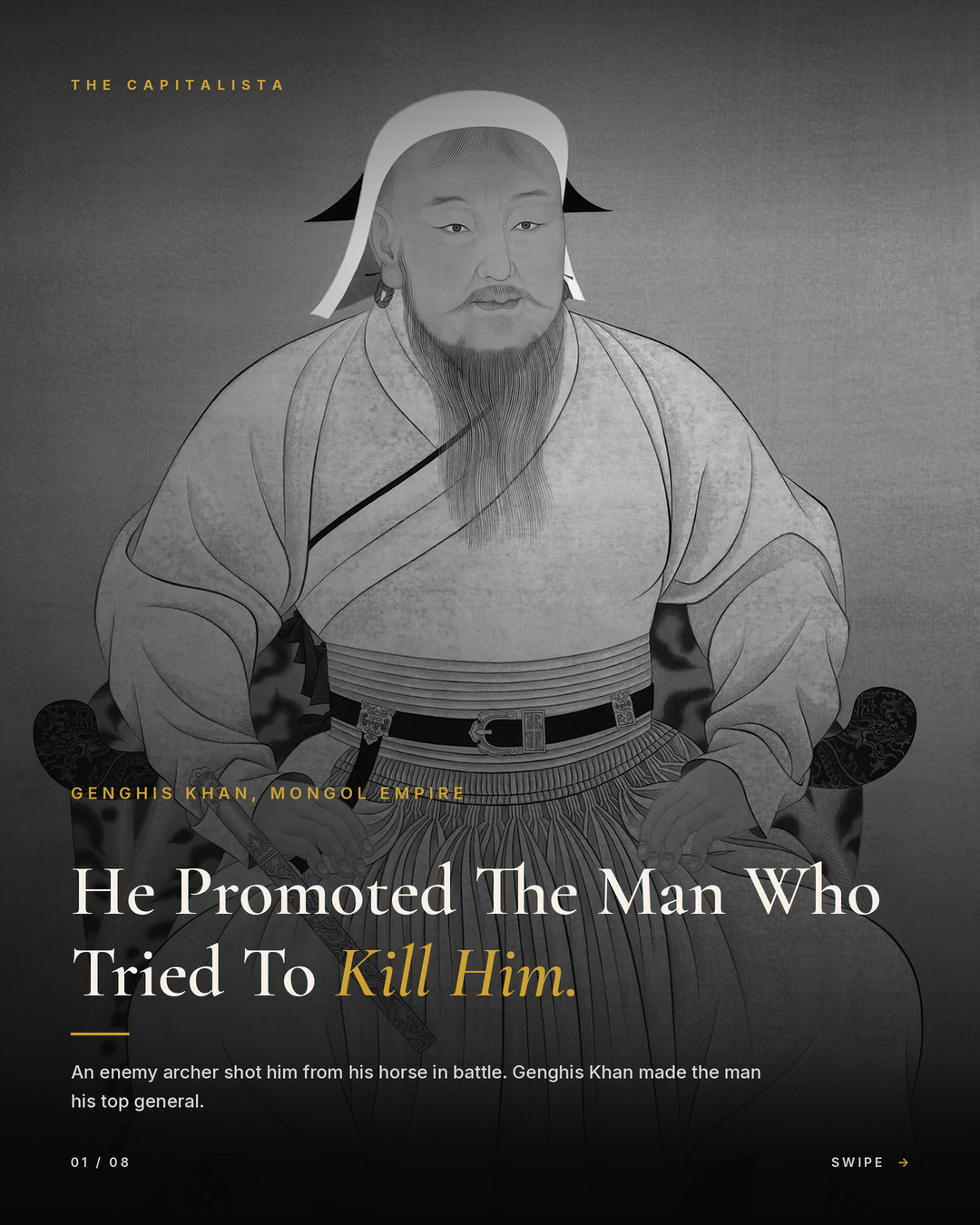
During a pivotal battle, an enemy archer took aim at Genghis Khan and put an arrow into his horse, a shot that nearly ended the life of the man
who would go on to build the largest contiguous land empire in history before it ever began.
When the fighting was over, his soldiers hunted down the archer responsible and brought him before the Khan. By every custom of the time, what happened next should have been simple. The man who nearly killed their ruler would be executed, publicly and without hesitation.
Instead, the archer did something unexpected. He didn't deny the shot. He didn't beg for his life. He openly confessed, standing in front of the man he'd nearly killed, that the arrow had come from his own bow.
Genghis Khan didn't hear a confession. He heard a demonstration of exactly the qualities he needed most: precision under pressure, and the nerve to own the truth even facing death. He made the man one of his top generals.
This decision, choosing operational utility over personal vengeance, is one of the most instructive leadership lessons in history, and most leaders today, running businesses instead of empires, still fail to apply it.
The Instinct Every Leader Has to Fight
Put yourself honestly in that moment. A man tried to kill you. He nearly succeeded. Every instinct a human being has, especially one with absolute power and every justification in the world, points toward retribution. Executing him wouldn't just have been understandable. It would have been expected, and nobody would have questioned it.
This is exactly the instinct that quietly shapes far too many leadership decisions in business, just at a smaller and less dramatic scale. Someone challenges you directly. Someone points out a flaw in your plan in front of your team. Someone's blunt honesty makes you look less capable in a moment you wanted to look strong. The instinct is the same one Genghis Khan faced: push them out, discredit them, or quietly freeze them out of influence.
Most leaders don't recognize this instinct for what it is, because it rarely announces itself as vengeance. It disguises itself as "culture fit," or "not a team player," or a vague sense that someone is "difficult." But underneath the polite language is often the same reflex the Khan resisted: protecting your ego from someone whose competence threatens it.
What Made This Decision Different
The reason this story has survived for eight centuries isn't that Genghis Khan was simply merciful. He wasn't. He built his empire through some of the most ruthless military campaigns in recorded history. Mercy wasn't his operating principle.
What made this decision remarkable was that he had completely detached his personal resentment from his evaluation of the man's operational value. He didn't ask "how does this person make me feel?" He asked "what is this person actually capable of, and is that capability valuable to what I'm trying to build?"
The archer had just demonstrated, under the most extreme possible pressure, that he could hit a difficult target with precision, and that he had the composure to tell the truth even when a lie might have saved his life. Those are exactly the qualities that make an exceptional military commander. Genghis Khan recognized that the same skill that had nearly killed him was precisely the skill his empire needed more of.
This is the distinction that separates elite leadership from ordinary leadership: the ability to evaluate someone's utility to your objective completely independent of how they made you feel personally.
Why Comfort-Seeking Leadership Caps Your Ceiling
Most leaders, without ever consciously deciding to, build teams that optimize for their own comfort rather than for the objective. They surround themselves with people who agree, who don't challenge decisions in front of others, who make the leader feel confident and validated on a daily basis.
This feels good. It also guarantees stagnation, because the people most likely to catch a critical flaw in your strategy are exactly the people willing to make you uncomfortable by pointing it out. A team of people selected for their agreeableness is a team with no early warning system. By the time a comfortable, sycophantic team recognizes a serious problem, it's usually already a crisis, because nobody was willing to surface it earlier.
Genghis Khan didn't build the largest land empire in history by surrounding himself with people who told him what he wanted to hear. He built it, in part, by being willing to elevate someone who had just demonstrated, in the most literal and violent way possible, that they wouldn't simply defer to him.
The Real Cost of Executing the Archer
It's worth sitting with the counterfactual for a moment. If Genghis Khan had executed the archer, as tradition and every reasonable justification would have supported, nothing catastrophic would have happened. Nobody would have criticized the decision. The empire likely still would have grown.
But he also would have destroyed a genuinely rare asset purely to satisfy a personal emotional impulse. And that's the real cost of comfort-seeking leadership: it's rarely a single catastrophic mistake. It's a steady, invisible accumulation of talented, capable people pushed out or sidelined because their competence made someone uncomfortable. The empire that results from consistently making that trade isn't a smaller version of the empire that could have existed. Over enough decisions, it's a fundamentally different and lesser one.
This is nearly impossible to measure in real time, which is exactly what makes it so dangerous. You don't get a dramatic failure event when you lose a great hire to ego protection. You just quietly never find out what they would have built.
The Two Paths Every Leader Chooses Between
Every time a leader is confronted with someone who challenges them, embarrasses them, or makes them uncomfortable, there are only two paths available, and the choice between them compounds over an entire career.
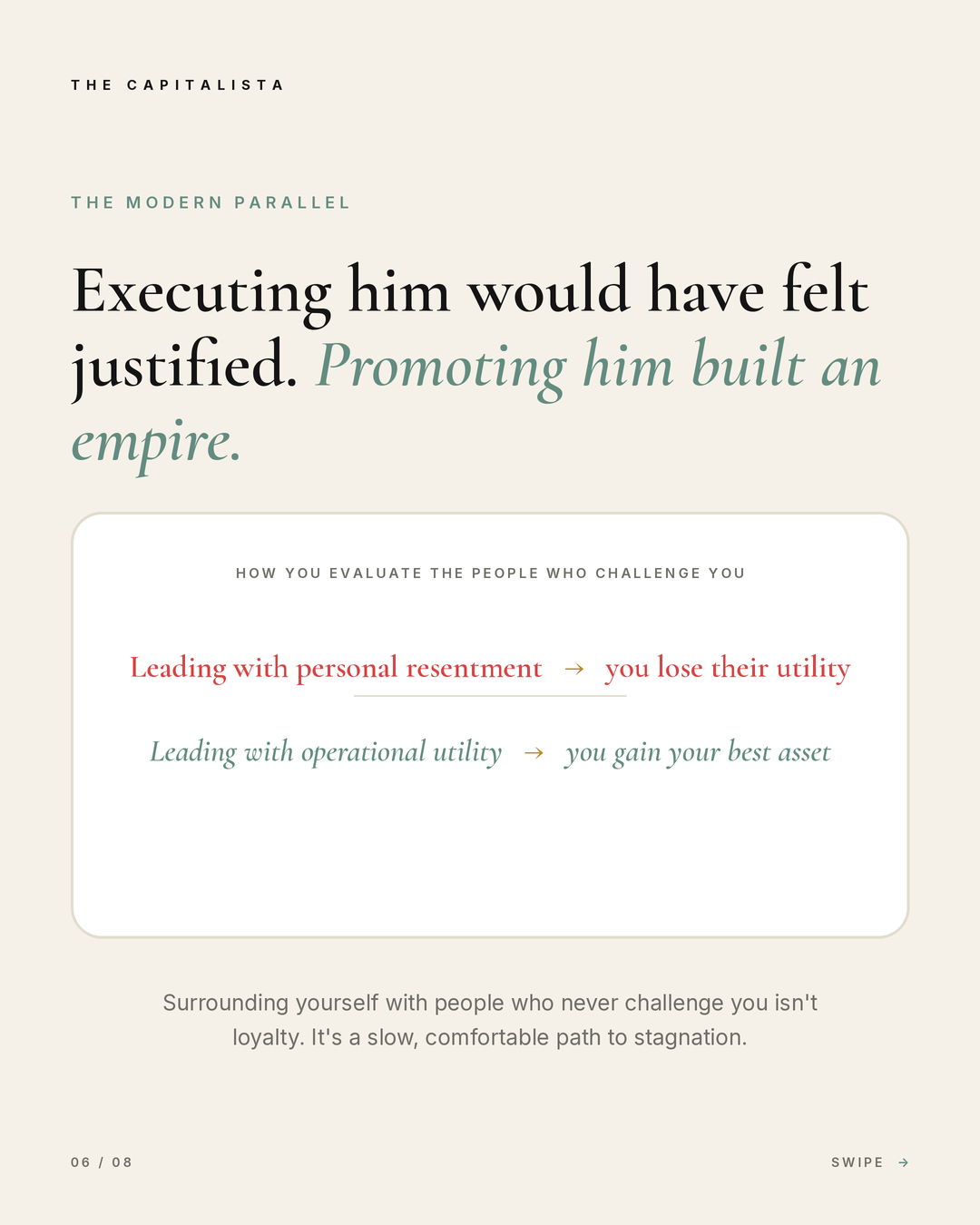
The first path is leading with personal resentment. You let the discomfort of being challenged determine how you treat the person who challenged you. This path feels justified in the moment, and it costs you their utility permanently. Whatever value that person could have provided is gone, and the people watching learn a clear lesson: don't challenge this leader, even when you're right.
The second path is leading with operational utility. You separate the discomfort of the moment from an honest evaluation of what the person actually offers. This path is harder, because it requires managing your own ego in real time, in the exact moment your ego is most activated. But it's the path that compounds into an organization capable of catching its own mistakes before they become catastrophic.
Genghis Khan chose the second path in the single moment where the first path would have been most justified. That's precisely why the story endures.
How to Apply This in Your Own Leadership
1. Identify the person you've been avoiding
Most leaders already know who this is without much reflection. It's the direct report whose feedback you dread, the colleague who pointed out a mistake in a way that stung, the partner whose bluntness reads as disrespect. Name them specifically.
2. Separate the discomfort from the competence
Ask yourself honestly: is this person's presence uncomfortable because they're genuinely bad at their job, or because they're good enough to be right about something you didn't want to hear? These require completely different responses, and conflating them is how talented people get pushed out for the wrong reasons.
3. Evaluate their actual utility to your objective
Set aside how the person makes you feel entirely, at least for this exercise. What do they actually produce? What have they caught that others missed? What would you genuinely lose if they were gone? Write the honest answer down.
4. Build the habit before you need it in a crisis
Genghis Khan didn't decide how to treat the archer in a calm moment of reflection. He decided in the most emotionally charged moment imaginable. The only way to make the right call under that kind of pressure is to have already built the habit of separating ego from evaluation in smaller, lower-stakes moments first.
5. Watch what your team learns from how you handle challenge
Every time you respond to a challenge with retribution or with genuine evaluation, everyone watching learns something about what's safe to bring to you. That lesson compounds across every future decision your team makes about whether to surface a problem early or hide it until it's too late to fix quietly.
The Line Between This and Tolerating Bad Behavior
This lesson has an important boundary. Subordinating your ego to your objective doesn't mean tolerating genuine incompetence, disrespect for its own sake, or people who create chaos without producing value. The archer wasn't promoted because he was defiant. He was promoted because his defiance was backed by demonstrated, rare competence under pressure.
The skill isn't blanket tolerance of anyone who challenges you. It's the discipline to accurately evaluate whether the challenge came packaged with real value, and to make that evaluation honestly instead of letting your bruised ego make the call by default.
What The Capitalista Does
Most founders make financial and personnel decisions with their ego quietly sitting in the room, even when they don't realize it. A vendor relationship continues because ending it feels like admitting a mistake. A hire stays too long because letting them go feels like a personal failure. A high performer gets sidelined because their bluntness stings.
The Capitalista is a fractional CFO service that helps you strip the emotion out of exactly these decisions. We:
- Evaluate people and vendor relationships on demonstrated financial utility, not on how comfortable they make the room
- Build objective performance frameworks so decisions about who stays and who goes aren't driven by personal friction
- Surface the uncomfortable numbers early, the same way a good challenger surfaces uncomfortable truths, before they become a crisis
- Help you separate a genuinely bad decision from one that simply bruised your ego, so you're not protecting mistakes out of pride
- Structure your financial operations around what actually builds enterprise value, not around what feels validating in the short term
Genghis Khan built an empire by asking one brutal question every time his ego was on the line: what does this actually do for my objective? Most businesses would grow faster if their leaders asked themselves the same question a little more often.
Frequently Asked Questions
What is the business lesson from the Genghis Khan and the archer story?
The lesson is that elite leadership requires evaluating people on their demonstrated competence and utility to your objective, not on how they make you feel personally. Genghis Khan chose to promote the man who nearly killed him because the same skill that threatened him was exactly what his empire needed.
Why do leaders surround themselves with people who never challenge them?
It's a natural, comfort-seeking instinct. Agreement feels validating and safe, while challenge feels threatening, even when the challenge is accurate and valuable. Left unchecked, this instinct produces teams that can't catch serious problems until they become crises.
How do I know if someone is genuinely difficult versus genuinely valuable and uncomfortable?
Separate the discomfort from the output. Ask what the person actually produces, what mistakes they've caught, and what you'd lose if they were gone. If the discomfort is paired with real, demonstrated value, it's likely the second case. If there's no real output behind the friction, it may genuinely be a fit problem.
Does this mean I should tolerate disrespectful or chaotic behavior from talented people?
No. The lesson isn't blanket tolerance of anyone who challenges you. It's the discipline to accurately evaluate whether a challenge comes with real, demonstrated competence behind it, rather than letting a bruised ego make blanket decisions about how to treat every uncomfortable moment.
How do I start applying this in my own leadership?
Start by naming, specifically, the person you've been avoiding due to personal friction. Then honestly evaluate their actual utility to your bottom line, separate from how interacting with them makes you feel. That single exercise usually reveals whether ego or genuine judgment has been driving the relationship.
The Bottom Line
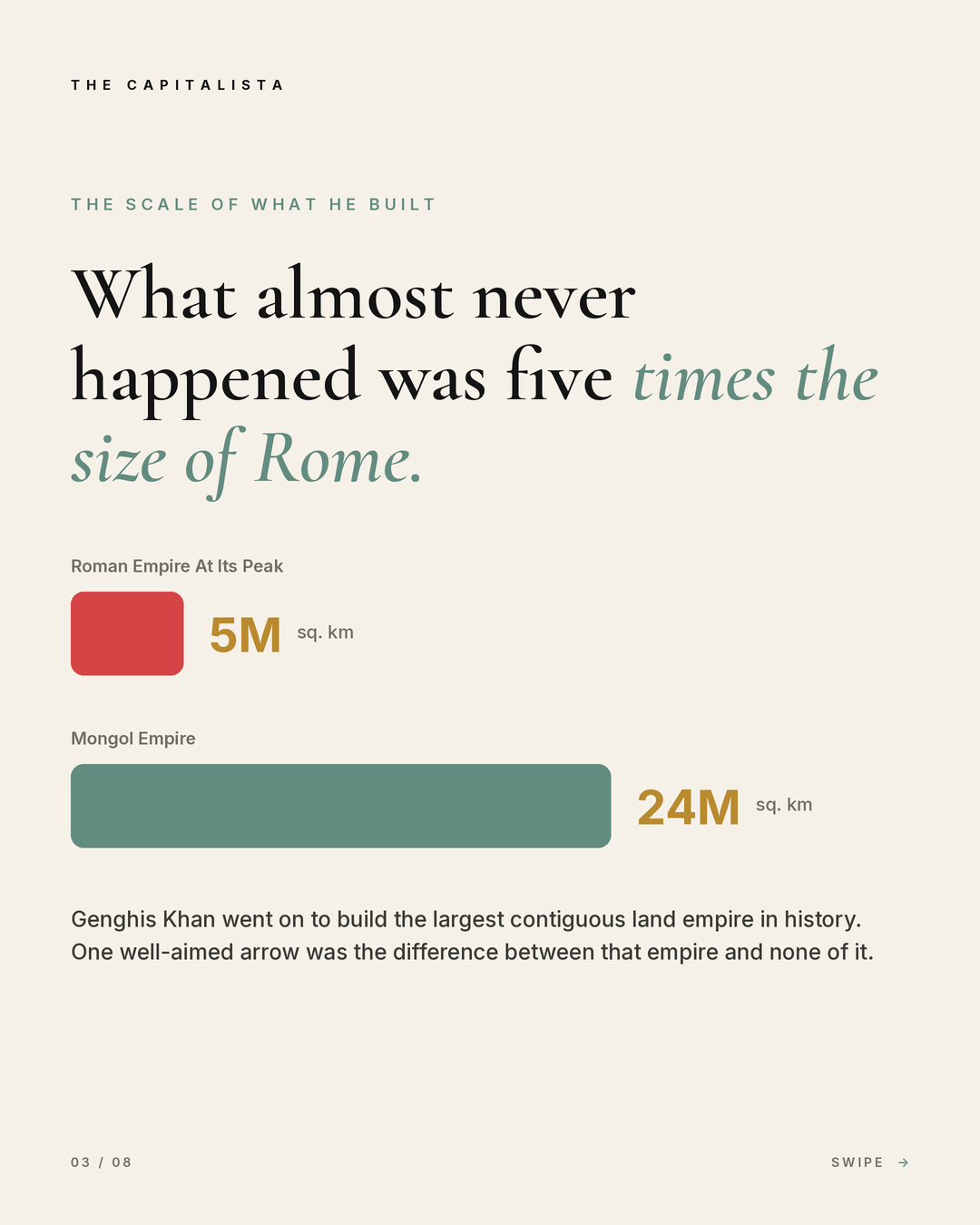
Genghis Khan had every justification in the world to execute the man who nearly killed him. Instead, he asked a colder, harder question: what does this person's demonstrated skill actually do for what I'm trying to build? The answer built him one of his most valuable generals, and helped build the largest contiguous land empire in history.
Most leaders never face a moment as dramatic as an arrow aimed at their own horse. But they face smaller versions of the same choice constantly: reward the person who challenges you, or quietly push them out to protect your own comfort. Prioritizing comfort over competence is a choice, and over enough decisions, it permanently caps how far your organization can reach.
Who is the person you've been avoiding because of personal friction? And what is it actually costing you to keep avoiding them?