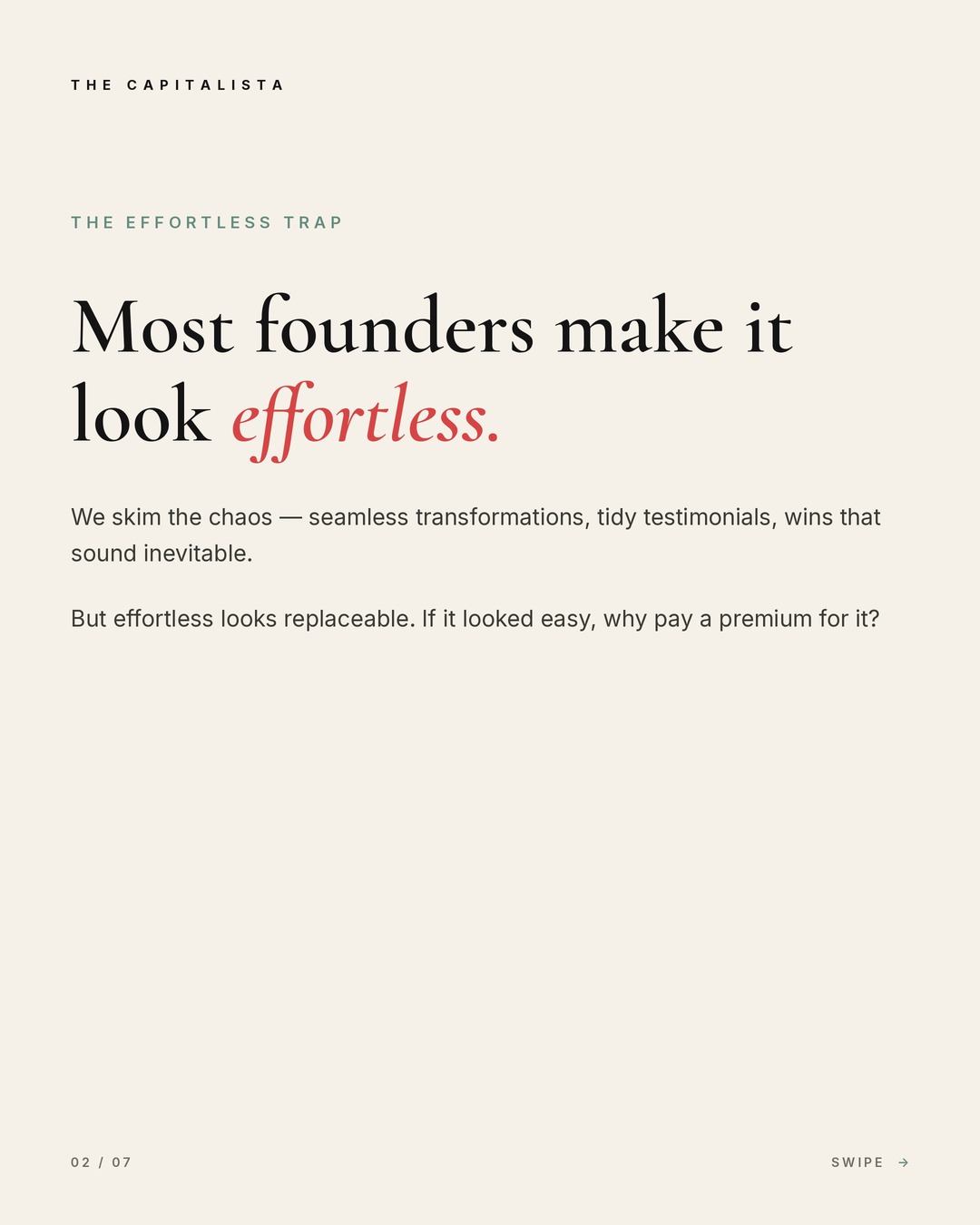
If you look at the portfolio, case studies, or pitch deck of the average B2B service provider, you will notice a recurring theme: everything looks incredibly easy.
The "before" state is briefly mentioned as a mild inconvenience, the solution is presented as a smooth, frictionless implementation, and the "after" state is a glorious graph pointing up and to the right. It is clean, it is polished, and it is completely forgettable.
By sanitizing the operational reality of your client transformations, you are accidentally devaluing your own work. You are making your high-ticket solution look like an off-the-shelf commodity. To fix this, business leaders and marketers need to take a masterclass in psychology from history’s greatest illusionist.
The Genius of Harry Houdini’s Friction
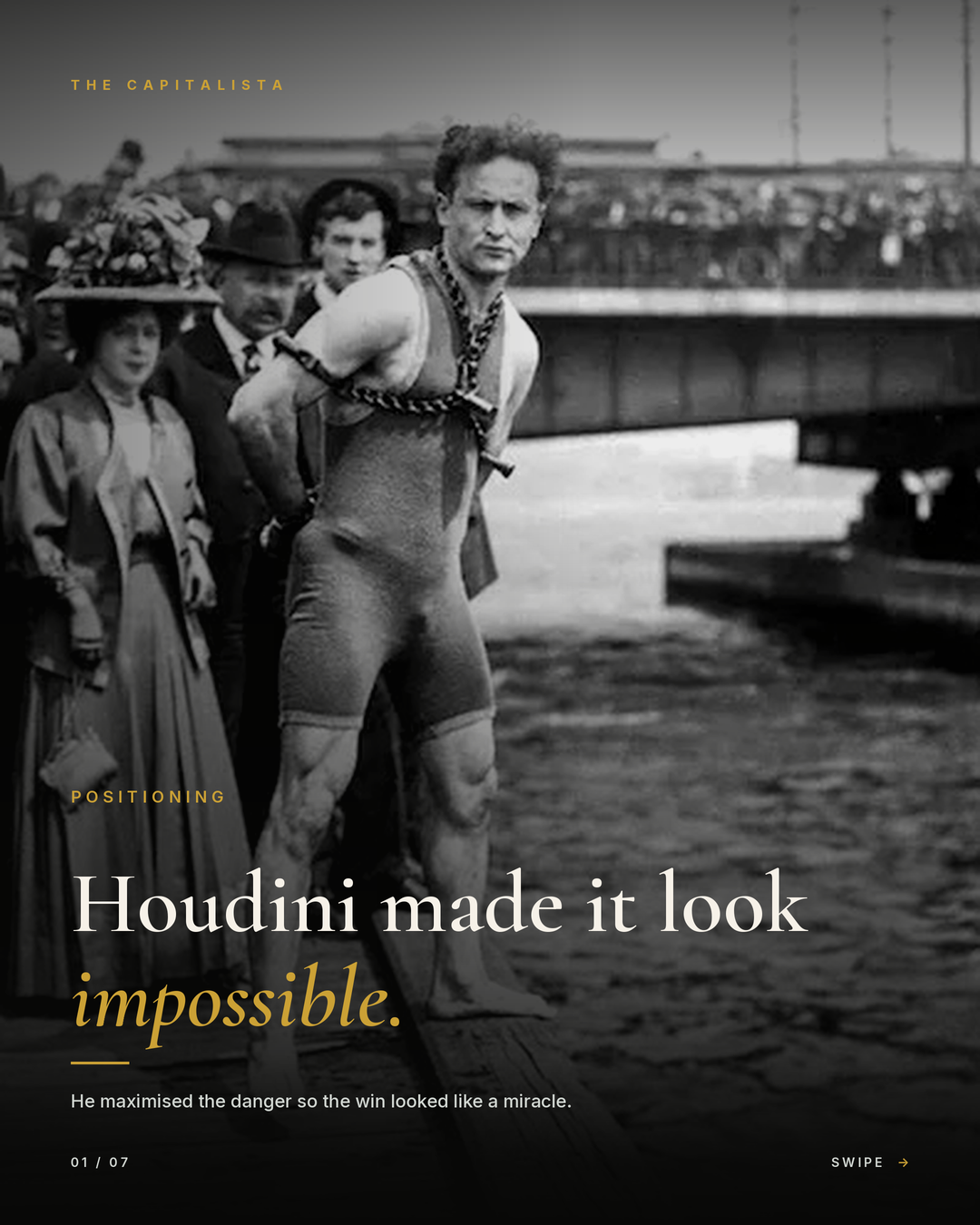
Master illusionist Harry Houdini understood one fundamental truth about human psychology: audiences do not pay to see things look easy.
Houdini did not become a global icon by simply slipping out of handcuffs behind a velvet curtain. He turned his performances into high-stakes, breathless psychological dramas.
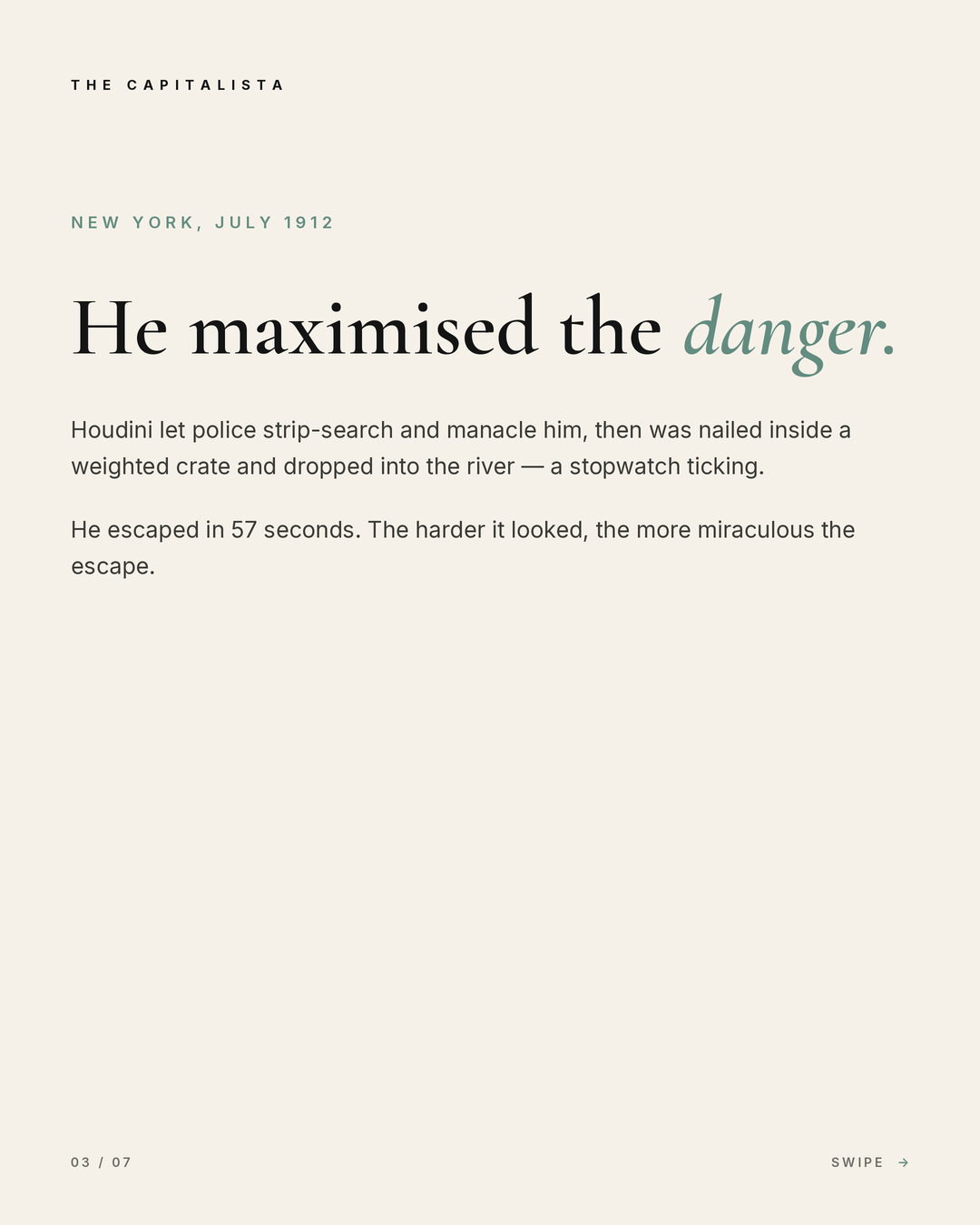
Before attempting an escape, Houdini deliberately maximized the perceived danger, friction, and brutal constraints of his environment. He allowed local police forces to strip-search him. He let them bind him in heavy, rusted iron chains. He had himself dropped into freezing rivers inside padlocked wooden crates while the crowd watched a giant stopwatch tick down.
Houdini knew that the magic wasn't just in the escape itself—it was in the sheer impossibility of the starting conditions.
By exposing the absolute worst-case scenario, he ensured that his eventual escape didn't just look like a neat trick; it looked like an absolute miracle of human capability.
The Founder’s Mistake: Sanitizing the "Before" Picture
Unlike Houdini, many modern founders and agencies dilute their market positioning by making their client transformations look seamless and effortless.
When presenting case studies, testimonials, or corporate wins, the instinct is to protect the client's reputation—and your own—by skimming over the chaos. You might vaguely mention "operational inefficiencies" or "data silos."
But nobody pays a premium to fix a vague inefficiency. They pay to stop the bleeding.
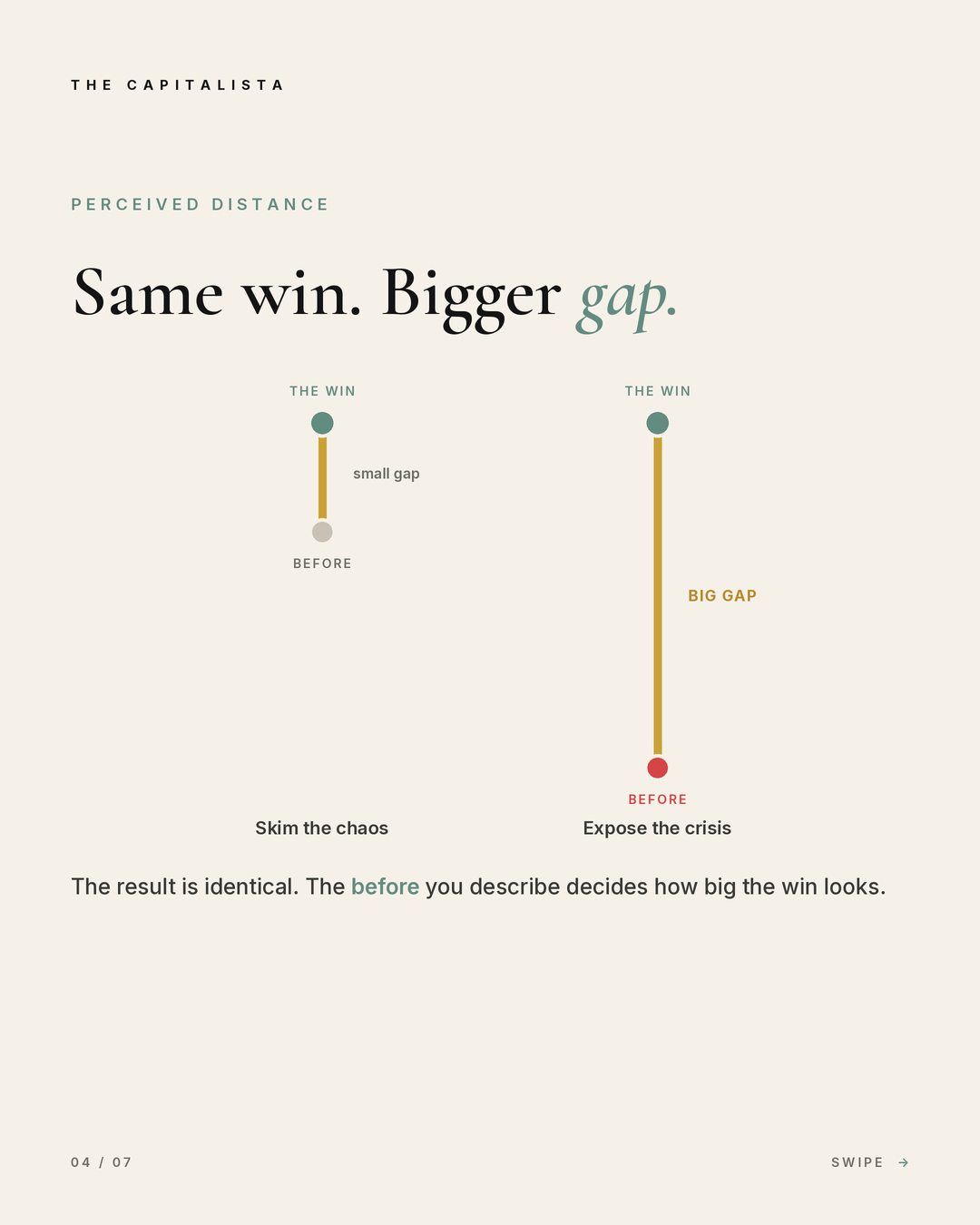
When you gloss over the friction, you rob your own narrative of its power. If the starting point wasn't that bad, then your operational solution doesn't seem that valuable. It becomes just another vendor service rather than a critical rescue mission.
The Psychology of Contrast in Case Studies
In marketing and sales, value is entirely relative. The perceived value of your solution is directly tied to the perceived severity of the problem. This is the psychology of contrast.
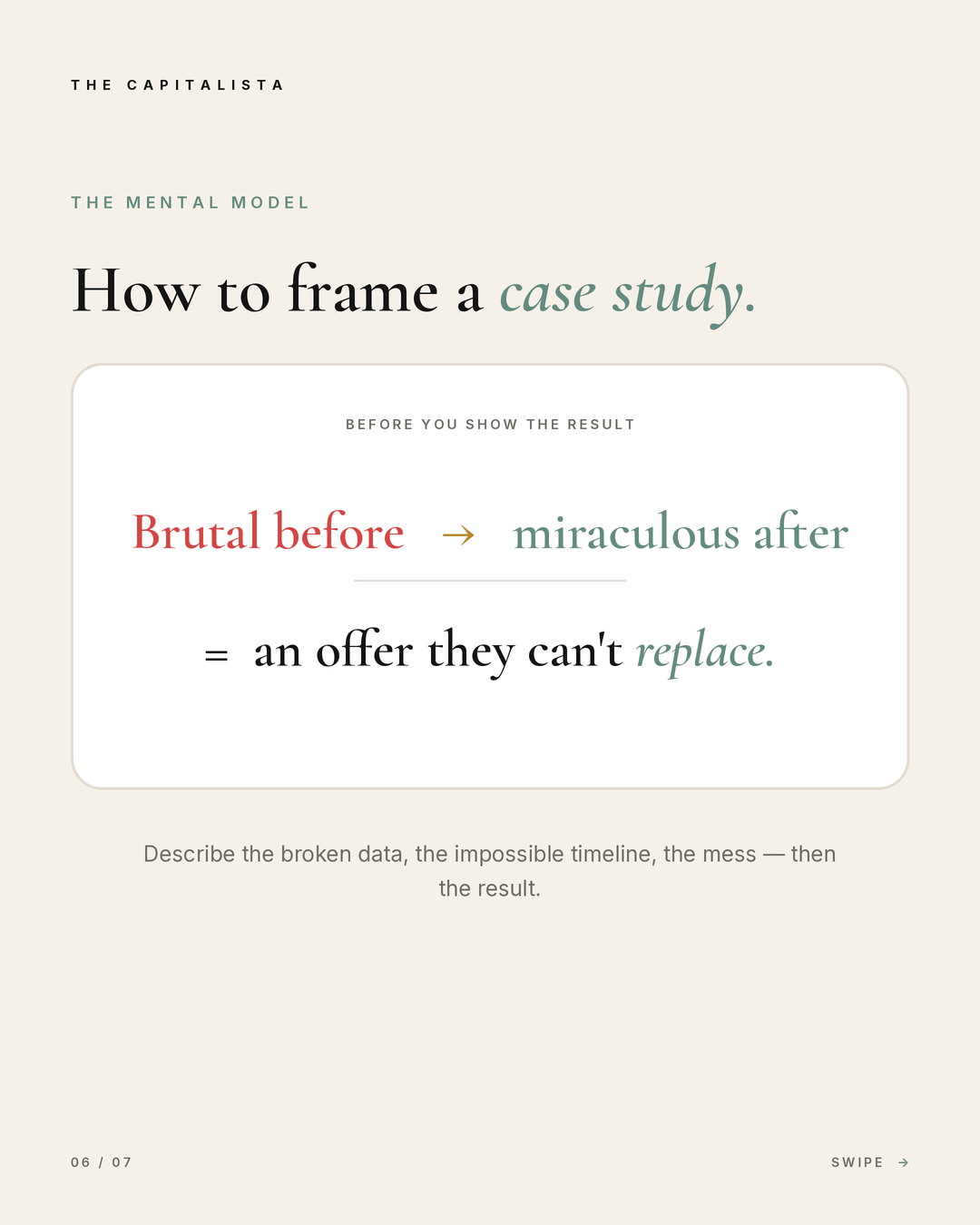
To make your operational solution look miraculous and irreplaceable, you must highlight the extreme friction of the starting point. Highlighting a severe operational crisis doesn't weaken your narrative; it creates the necessary contrast to make your expertise shine.
What to Expose in Your Next Case Study
When writing your next piece of marketing collateral, stop hiding the mess. Expose the absolute chaos you walked into by detailing the following:
- The Broken Systems: Don't just say "data issues." Describe the three incompatible legacy software systems that were crashing daily and forcing employees to do manual data entry until midnight.
- The Impossible Timelines: Detail the looming regulatory deadline or the impending product launch that had the executive team in a state of sheer panic.
- The Financial Hemorrhaging: Explain exactly how the systemic failures were actively bleeding revenue, losing customers, or destroying profit margins right before you arrived.
- The Emotional Toll: Highlight the frustration, the burnout, and the overwhelming friction the client's team was experiencing.
Stop Selling the Output. Sell the Rescue.
Nobody hires an expert because things are going fine. They hire experts because they are trapped in a padlocked box, bound in chains, and the water is rising.
Review your primary case study today. Rewrite the introduction to vividly expose the severe operational crisis your client faced before hiring you. Describe the wreckage in detail. The darker, messier, and more chaotic the starting point, the more undeniable your solution becomes.
Don't make it look easy. Make it look like magic.